Terminal
Role
Narrative Designer
Team Size
5
Timeframe
Built in 31 days
Game Link
itch.io page
Tools
Unity, Blender
“What if the game is a stealth adventure that takes place on a train? Basically, what if Metal Gear Solid had a baby with Snowpiercer?”
Sneak. Survive. Escape.
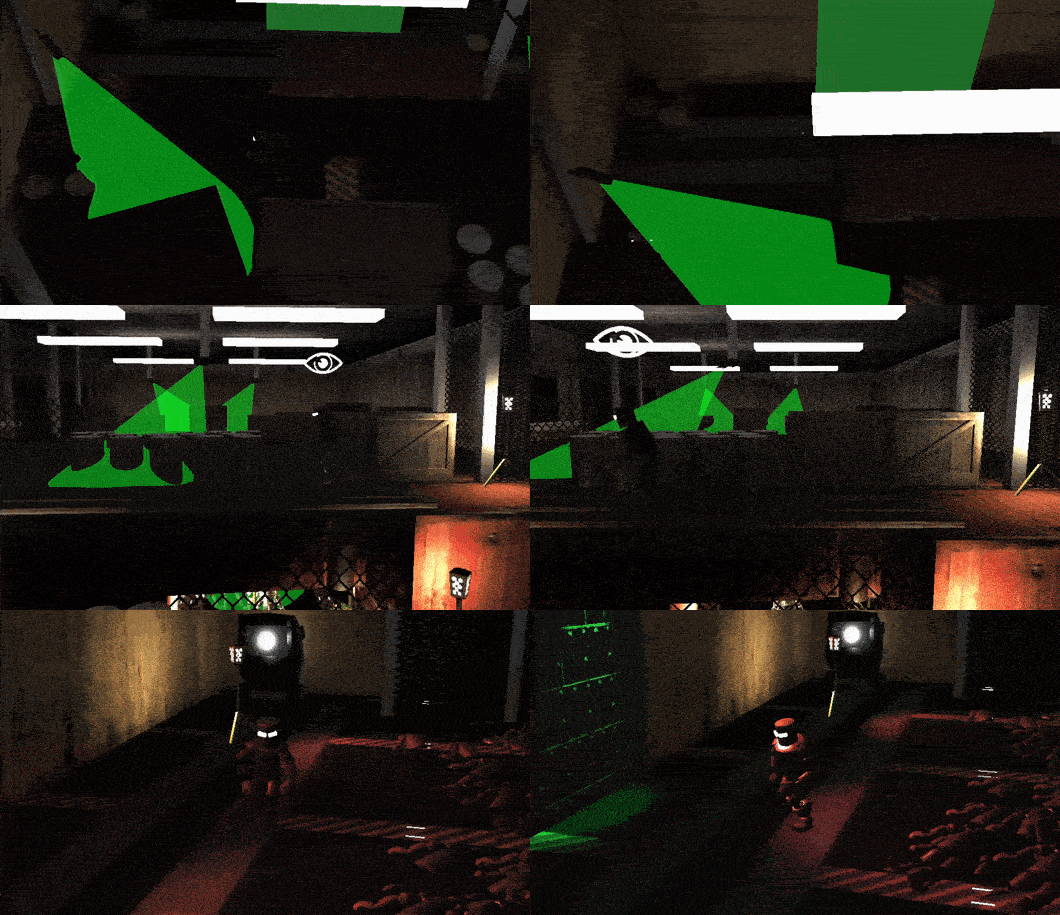
You awaken on a train with no memory of how you got there, its cars lined with cameras, crawling with gas-masked figures, every one of them hunting you down. Slip past, get out, and maybe learn why you were aboard at all.
Reading memory…
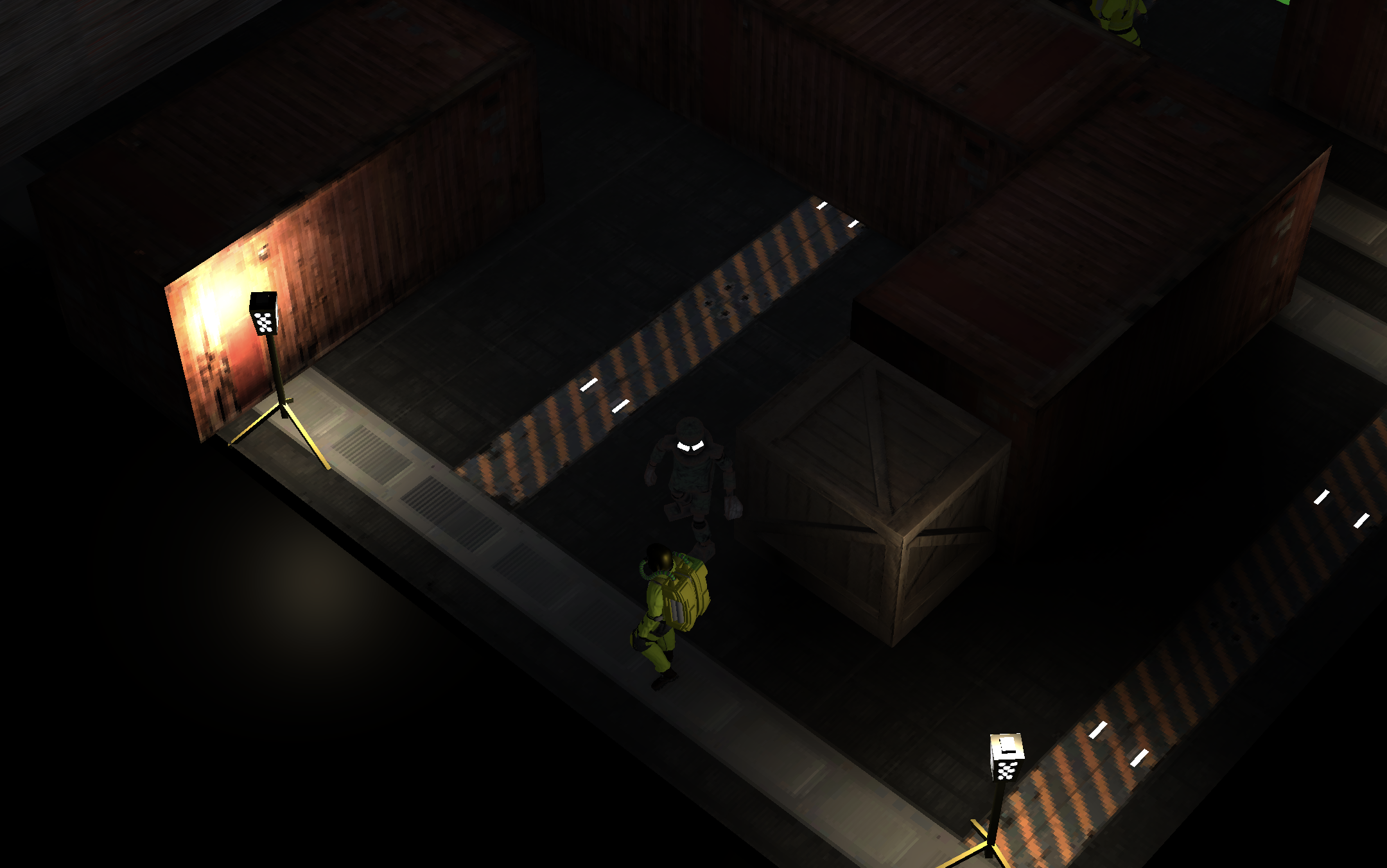
You are C-731
A humanoid robot who wakes with one directive: escape this train. No feelings, no pain: no problem. And yet, something like “curiosity,” that pulls you toward whatever it’s hiding.
First, you’ll have to find a terminal.
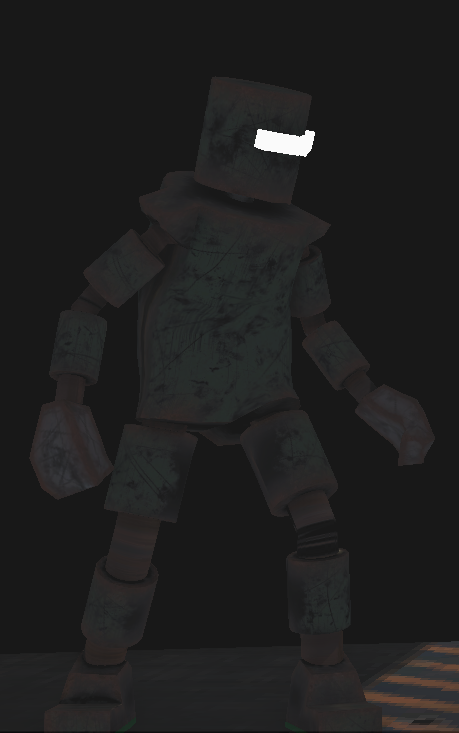
The train tells the story…
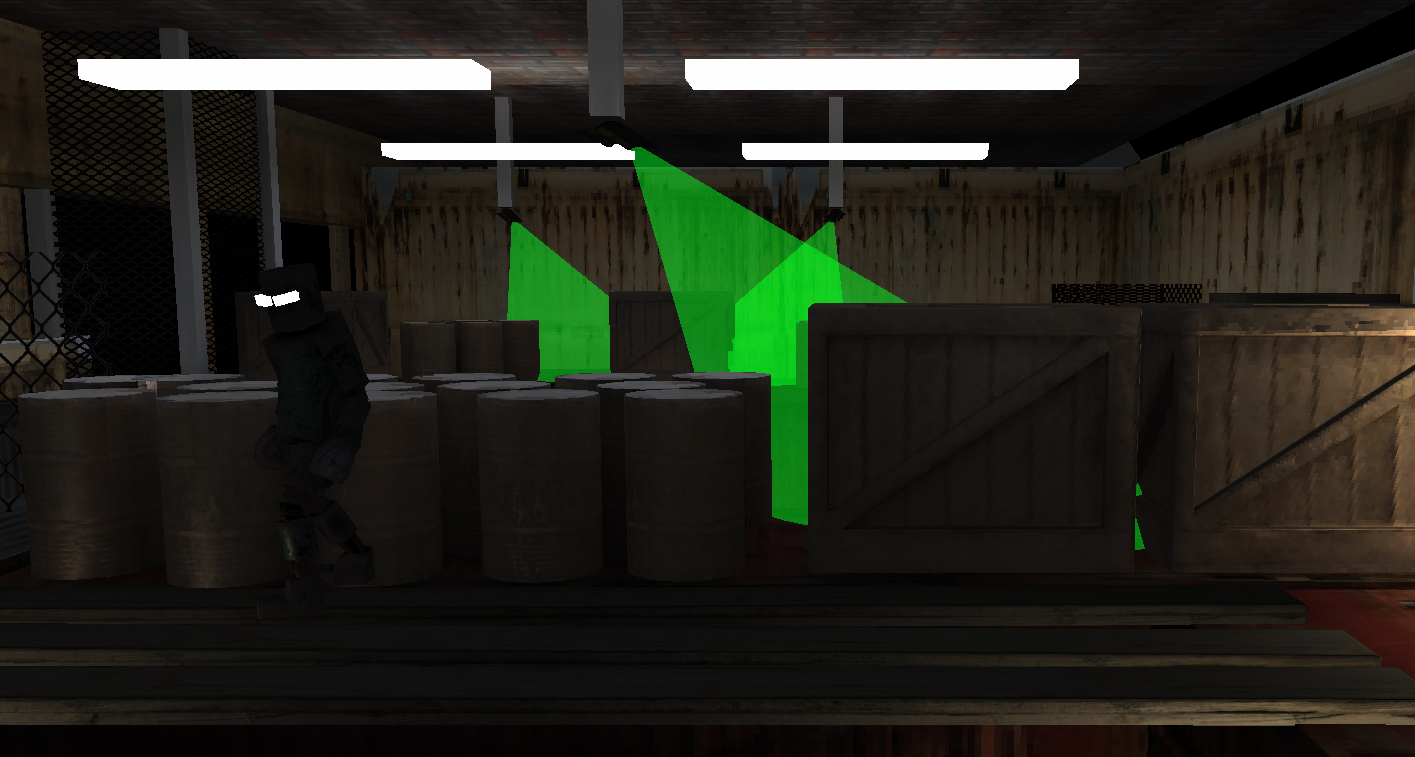
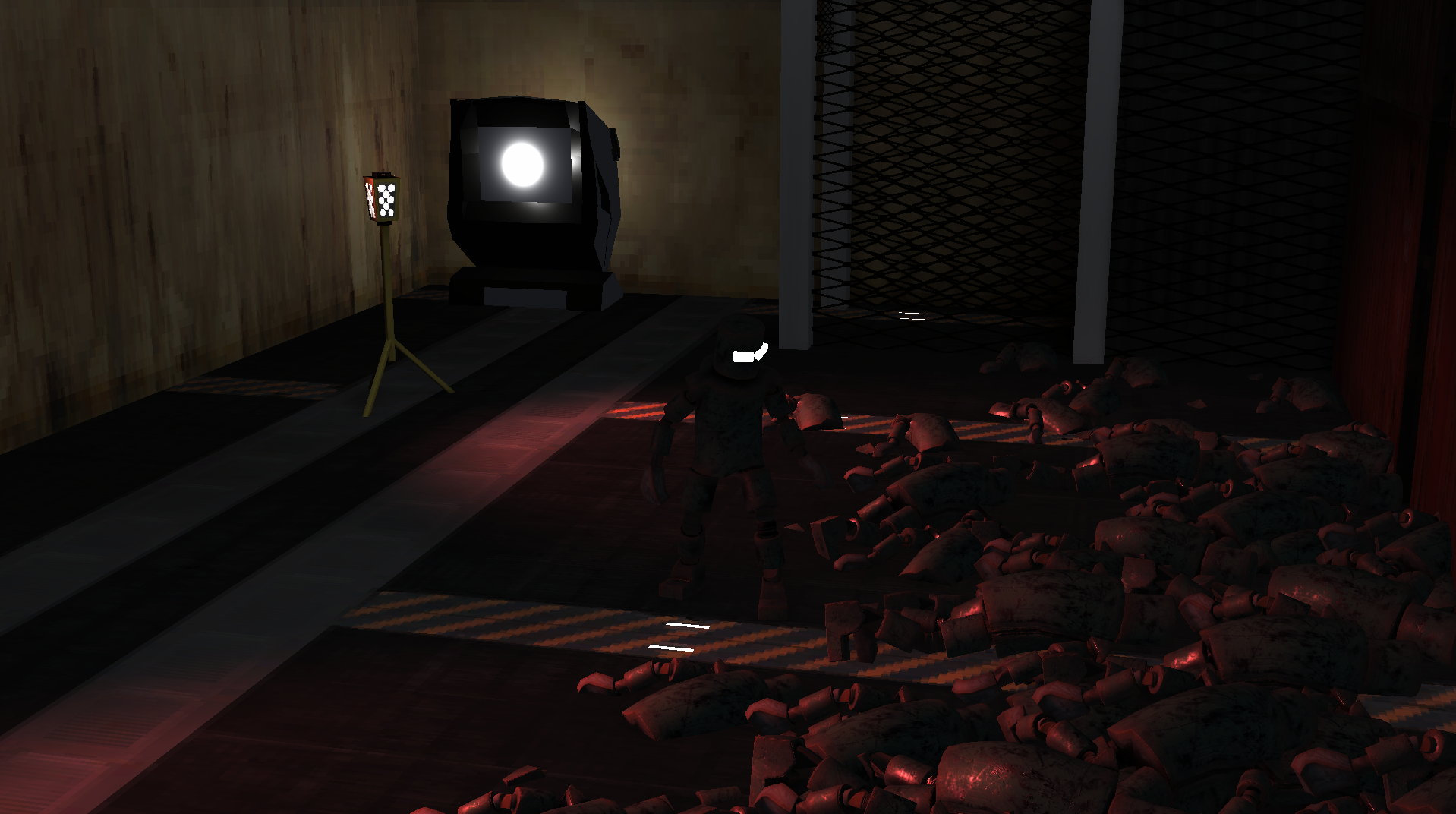
In one month, with a team of five, I scripted beats for a handful of scenes built entirely on what the player could see: oppression and surveillance read from the world, never explained. Guards posted at terminals. Cameras sweeping the corridors. Bots funneled into rooms in silent rows. No cutscenes, no dialogue. The train does the talking.
… And the terminals tell the rest.
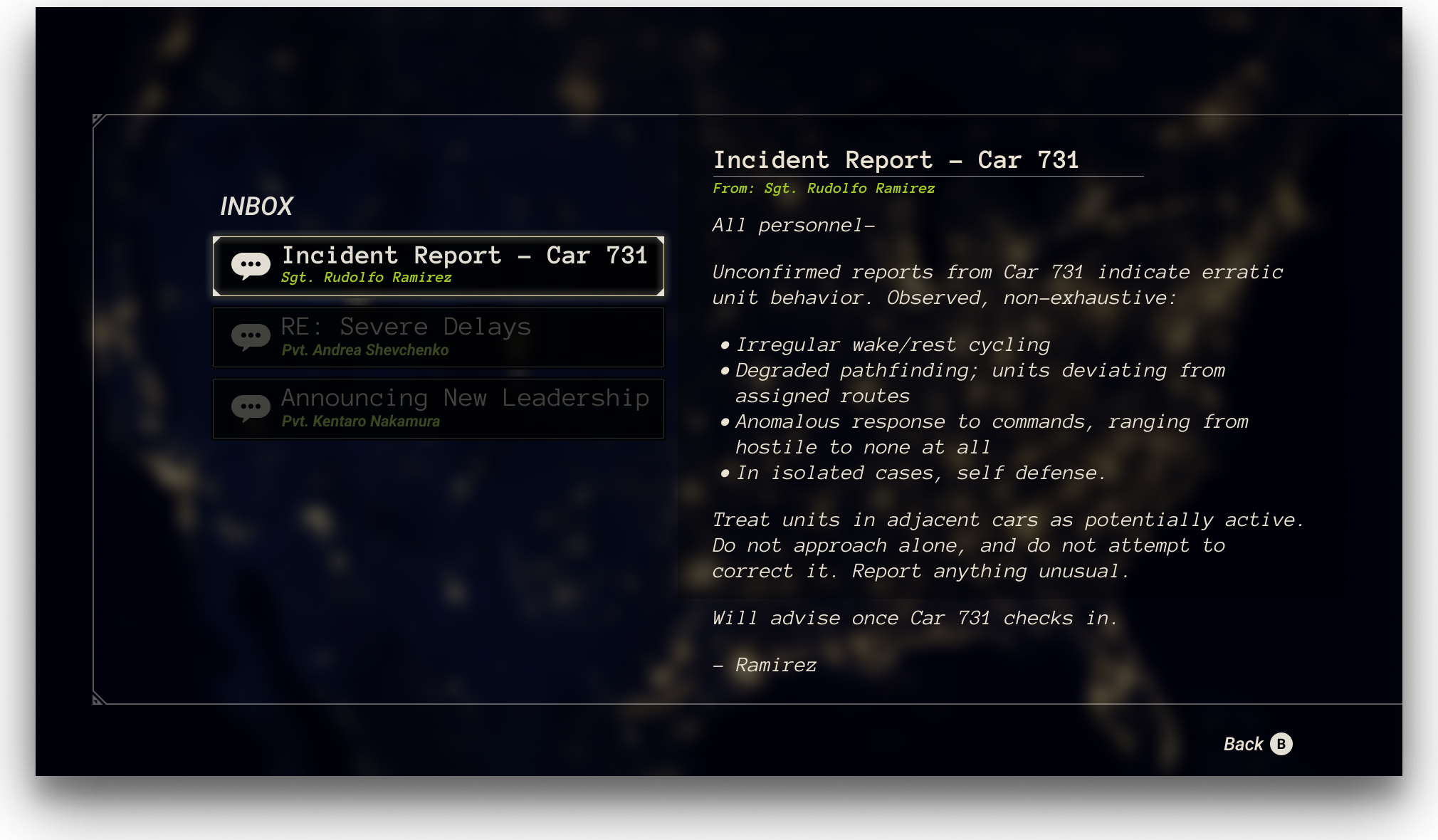
I wrote the emails and logs scattered across the train’s terminals - the world beyond the cars, told in the voices of the people running it. Piece together, from incompetent brass to the rattled recruits, what the bots are really for, why they have to be contained, and where the train is headed.
Designing the enemy voice
I wrote enemy barks to do three things at once:
1) Signal the guard’s awareness state to the player,
2) Give each guard personality and a flash of humanity, and
3) Stay short and natural enough to survive heavy repetition
Unfortunately, we were only able to implement one bark in the full release, but it was an invaluable experience as a writer.
Enemy Barks
-
“Sarge said they spotted it in the next car over. Keep your eyes peeled.”
Tone: Assertive, Calculating
Triggered: When the player is near the guard, but still hidden.
-
“Huh? Someone there?”
Tone: Startled
Triggered: When the player is spotted for less than 2 seconds or leaves a clue (footprints, unconscious body)
-
“Pushing up for a closer look.”
Tone: Nervous, cautious
Triggered: After “suspicious” state, as enemy begins walking to the source of the suspicion.
-
“Hostile bot detected! Fry him!”
Tone: Aggressive
Triggered: when player steps into enemy FOV
-
“No, no, no! Lost visual on it!”
Tone: Desperation
Triggered: one minute passed and player has stayed hidden.
-
“I’m starting to see things. Returning to position.”
Tone: Incredulous
Triggered: One minute since lost target state
What Players Commented
“nice idea, would like to see more interactions with the environment and some tweaks with the camera to avoid those ceiling lights. All in all was fun to sneak around, and I would be interested in seeing this game updated in the future”
— Storm Codes“I really liked the atmosphere in this game, and I thought that making the environment semi-transparent when the player walks behind something was a cool solution for increased visibility.”
— chromaticJelly“This game is quite fun to play. The idea of this game is awesome and on improving the mechanics and polishing the overall gameplay, this might become a great game ahead of time.”
— VoiD1 GamingLessons Learned
There’s a natural pacing to a great level. I learned to build a mission around tension (sneaking around guards, using terminals) that simmered until the third act boiling point, where we had a big reveal (a massacre of other bots) followed by an epic chase (running from a giant mech). The quiet moments enhanced the loud ones, and vice versa.
I would have hid more collectibles throughout each level. Not only would it encourage players to linger and explore, it would have hinted at the larger world outside the train, told from different perspectives. Perhaps a written note from a paranoid officer, or the last recording from a dying bot.
When it comes to barks, less is more. I initially wrote long barks, but these were not able to convey the necessary game information. Sometimes, something simple and less descriptive speaks volumes. Ultimately, the writing should always serve to enhance (not detract from) the gameplay.